
Winter 2025
Dear friends,
As the year comes to a close and the holidays approach, I find myself reflecting on the incredible strength, resilience, and compassion of the Castleman disease community.
For patients and families living with Castleman disease, the holidays can bring a mix of emotions—gratitude for progress, hope for what’s ahead, and sometimes the weight of uncertainty that comes with a rare and unpredictable illness. If this season feels heavy, please know that you are not alone. Every step forward we’ve made this year has been driven by patients, loved ones, clinicians, and supporters standing together.
This past year brought meaningful breakthroughs—new insights, new collaborations, and new reasons for hope. But just as important, it reminded us why this work matters so deeply: real people, real families, and real lives impacted every day.
As we head into the new year, my promise to you is this: we will keep listening, keep pushing for answers, and keep fighting for better care and better futures for everyone affected by Castleman disease.
From all of us at the CDCN, thank you for being part of this community. Wishing you moments of peace, comfort, and connection this holiday season—and hope as we look ahead to what’s next.
Cofounder and President, Castleman Disease Collaborative Network (CDCN)
Founding Director, Center for Cytokine Storm Treatment and Laboratory (CSTL)
Associate Professor of Medicine, University of Pennsylvania
When Dr. Robin Williams reached out to Dr. David Fajgenbaum with concerns that her young patient, Avion, might have Castleman disease, that single act of collaboration changed everything. Through expert consultation and rapid coordination, Avion received the right diagnosis and treatment in time to save his life. Stories like this are the heart of the Castleman Disease Collaborative Network (CDCN), proof that no one fights this disease alone.
Over the past year, CDCN-driven collaboration has helped fuel major advances in how Castleman disease is diagnosed and treated.
Researchers have identified a new subtype of Castleman disease, oligocentric Castleman disease (OligoCD), which fills the gap between unicentric and multicentric disease and explains why some patients didn’t previously fit into existing categories. The CDCN has also supported critical work to help physicians distinguish Castleman disease from look-alike conditions such as hemophagocytic lymphohistiocytosis (HLH) using a simple blood test, where rapid diagnosis can be the difference between life and death.
Most recently, the launch of the Castleman Disease Expert Panel has created a new lifeline for patients and physicians worldwide. Through this program, doctors can present challenging cases to a group of top Castleman disease experts for real-time guidance ensuring that geography is no longer a barrier to expert care. Since its launch, the Expert Panel has already reviewed dozens of complex cases from across the world, offering renewed hope to families who had exhausted local options.
Yet challenges remain. Castleman disease is still ultimately diagnosed through lymph node pathology, and many patients face long, uncertain journeys before reaching a final diagnosis. That’s why the CDCN continues to push forward, connecting doctors, empowering patients, and driving research toward clearer answers and better treatments. Together, through collaboration, we are changing what’s possible for the Castleman disease community.
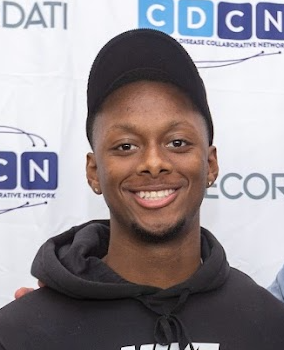
Avion Dent was a standout freshman athlete at Blaine High School in Minnesota, poised to compete in varsity football, basketball, and track. During the summer before his sophomore year, he began experiencing severe stomach pain that quickly escalated, forcing him to be admitted to the ICU at M Health Fairview Children’s Masonic Hospital.
“I just couldn’t understand what was happening to me,” recalls Avion. “When I couldn’t do any of my sports anymore, I didn’t really feel like myself.”
After about three months of tests and evaluations, doctors diagnosed him with idiopathic multicentric Castleman disease (iMCD), the hospital’s first confirmed case. The disease caused enlarged lymph nodes, intense inflammation, and complications affecting his organs, abruptly sidelining his athletic dreams.
With intensive medical care and chemotherapy, Avion gradually stabilized. Throughout his treatment, the support of friends and family was constant. “They always told me to keep my head up… and they kept me happy through it all,” he says.
Today, Avion is a freshman studying Marketing at Concordia University in St. Paul, Minnesota. He successfully returned to school and is thriving academically, an achievement that once seemed impossible. “I just wanted to make my whole family proud. Not that many people in my family go to college, so it’s great,” he says.
Avion’s mission extends beyond his own recovery. He hopes to open a gym and mentor student-athletes facing setbacks, using his experience to inspire others.
“If those kids can have someone helping them that already went through it, then it can change their lives,” he explains.
This past year, Avion has also begun raising awareness about Castleman disease, sharing his story with classmates and local youth athletes to educate them about rare diseases and the importance of persistence in the face of unexpected medical challenges. “I want people to know that even when things feel impossible, there’s hope and that getting help early can make a huge difference,” he says.
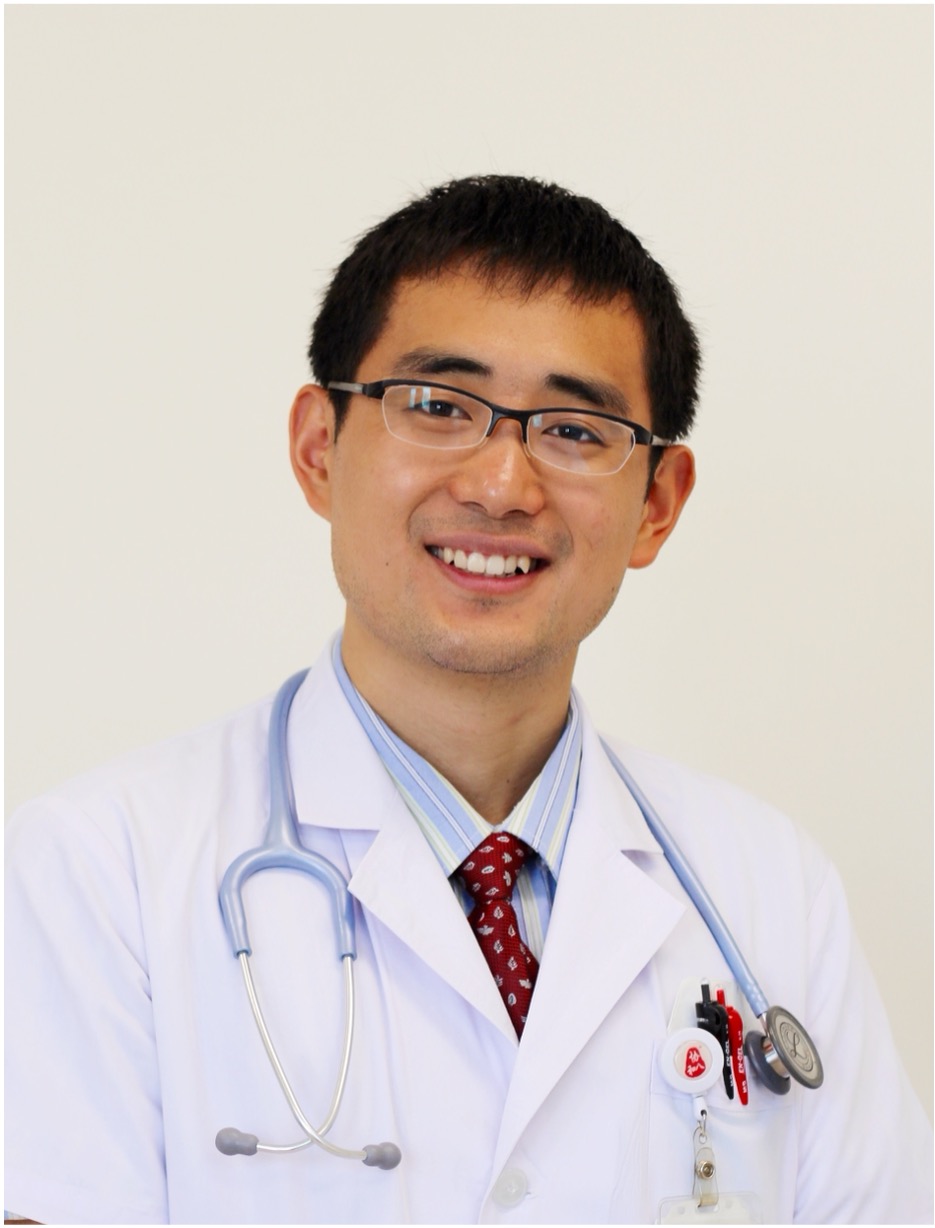
Lu Zhang, M.D., is Deputy Director of the Department of Hematology at Peking Union Medical College Hospital (PUMCH) in Beijing, a Professor and Master’s Supervisor, and Secretary General of the China Castleman Disease Network (CCDN). He also serves as a Committee Member of the Hematological Rare Disease Academic Group within the Chinese Society of Hematology and as a Scientific Advisory Board (SAB) member for the Castleman Disease Collaborative Network (CDCN). In 2024, he received the CDCN Castleman Warrior Award in recognition of his contributions to research and patient care.
Dr. Zhang’s journey into Castleman disease and immunology research was inspired by the story of Dr. Fajgenbaum. “His story gave me strength and guided me into the field of Castleman disease,” Dr. Zhang says. “I feel fortunate that my hospital is a leading center for rare diseases, giving me the opportunity to pursue research while directly helping patients and families affected by this rare condition.”
This past summer, Dr. Zhang spent two months in Philadelphia working alongside the CSTL team, gaining hands-on experience with Castleman disease research and patient care in an international setting. “Collaborating closely with the CSTL team was an incredible opportunity to learn from colleagues in the U.S. and bring new insights back to my work in China,” he notes.
Through his work with the CDCN and CSTL, Dr. Zhang has seen the power of collaboration. “Working together across study groups greatly enhances research for rare diseases,” he explains. He hopes that international and domestic collaboration will continue to advance understanding of Castleman disease and improve patient care.
In both research and clinical practice, Dr. Zhang is particularly focused on understanding the long-term management of idiopathic multicentric Castleman disease (iMCD). “One of the questions I’m most excited about is whether all iMCD patients truly need life-long treatment,” he explains. “Some patients, such as those with iMCD-TAFRO, could be regarded as curable and may not need indefinite therapy. I wish more physicians and patients understood that long-term remission is possible for some individuals.”
Beyond his work in hematology, Dr. Zhang enjoys playing table tennis and once helped the Department of Internal Medicine win second prize in the PUMCH table tennis tournament.
Dr. Zhang combines clinical expertise, academic leadership, and research insight to improve the lives of patients with Castleman disease in China and around the world, while remaining committed to advancing knowledge in this rare and complex field.
Our Ruxolitinib Clinical Trial is open for enrollment! The trial is designed for adults with idiopathic Multicentric Castleman Disease (iMCD) and have not gotten better from taking siltuximab or tocilizumab, or who cannot take those medications. Please contact our research team by emailing castlebank@uphs.upenn.edu or calling 267-586-9977 for more information.
A new mouse model of studying iMCD has provided the first evidence that a germline genetic mutation may contribute to iMCD-related symptoms. Follow-up studies are being done, and we will keep you posted. You can read more here.
The Fajgenbaum lab has determined that active viral infection is unlikely to be responsible for causing unicentric CD (UCD) and/or idiopathic MCD (iMCD). This is in contrast to the known fact that uncontrolled infection with human herpesvirus-8 (HHV-8) is responsible for a portion of multicentric Castleman Disease (HHV-8-associated MCD) cases. You can read more here.
An exciting combination of research strategies and laboratory work has led to identifying TNF signaling as a new, potential targetable mechanism in iMCD–TAFRO. Adalimumab (blocks the TNF pathway) was given to a patient with highly treatment-refractory iMCD–TAFRO. The addition of adalimumab induced a sustained remission over 24+ months. By combining research methods more targets may be identified for patents that are resistant to current treatments. You can read more here.
David recently took the TED stage to share his powerful personal journey with Castleman disease and how drug repurposing helped save his life and can reshape the future of rare disease treatment. If you missed it, you can watch his TED Talk here. It’s an inspiring look at how urgency, innovation and collaboration can turn hope into action.
We’ve recently updated our Physician Referral Lists to include more Castleman disease specialists than ever before, giving patients and families expanded options for expert care around the world. If you’re interested in receiving the newest version of the list, email Madison at madison@cdcn.org to request a copy.
Our Warrior Ambassadors have come together to create Cooking with My CastleFam, a brand-new cookbook raising funds to support the CDCN’s mission. Packed with favorite recipes from throughout our community, this special project is now available for purchase! You can order a physical copy or download it on your Kindle or tablet today. All proceeds support lifesaving Castleman disease research and patient programs.
Each year, the world comes together for Rare Disease Day to raise awareness for the 300 million people living with a rare disease, including those affected by Castleman disease. Let’s keep spreading the word and inspiring change! 💜
Our 2026 Quest for a Cure is back! Join us at The Pumphouse in Bala Cynwyd, PA, for an unforgettable evening celebrating progress, hope, and the power of community in the fight against Castleman disease.
Join Team Castleman when the Penn Medicine Orphan Disease Center hosts its annual Million Dollar Bike Ride (MDBR)! Whether you’re in Philadelphia or participate through the virtual rider option, together we can raise funds for CD research. Learn more and register!
ACCELERATE is the first-ever global patient registry for Castleman disease, with the goal of helping researchers identify patterns, build understanding and improve treatment options. Patients are encouraged to enroll at any stage of diagnosis and treatment, and can also be enrolled by surviving family members. Visit our website to learn more, or contact us at accelerate@uphs.upenn.edu or 215.614.0209.
The collection and study of blood and lymph node tissue samples donated by CD patients is critical to our research. The CDCN has made it very easy and cost-free for patients to share blood samples on an ongoing basis, and to share excess lymph node tissue samples from clinical procedures. Visit our website to learn more, or contact us at info@castlemannetwork.org or 267.586.9977.
The CDCN relies on financial contributions from individual donors and foundations to fund promising research studies and facilitate meaningful patient support initiatives. Visit our website for more information or to donate online. If you wish to speak with us regarding a contribution or a planned gift, contact us at gifts@castlemannetwork.org or 610.304.0696.